|
|
|

The Perspective, produced by The Pinnacle Corporation, is an industry wide
publication designed specifically for convenience retailers and petroleum
marketers. This newsletter focuses on common industry issues and
opportunities to improve your business, learn how with these articles
focusing on best practice recommendations, client case studies, and new
Pinnacle innovations.

FEATURED ARTICLES:
|

|
|
Flexibility and Choice
Many software providers in the convenience retail and fuel management
industry provide 'captive' general ledger applications as part of the
solution. As the demands for more accurate, timely, and relevant
information increase, these captive solutions often do not offer the
flexibility and control over your financials you may require to make the
best decisions for your business.....READ MORE
|
|
|
|
|

|
|
The Power To Choose
Pinnacle's mission is to provide flexibility of choice to our market and
our clients. This mission expands throughout every element of our
business, and while some clients desire a straight forward/cookie cutter
type approach to their new technology implementations, the vast majority
demands a technology partner that will adapt as closely to their overall
business strategies and operational goals....READ MORE
|
|
|
|
|

|
|
Saving Time and Resources with Instant Bill-of-Lading
Processing
If you are having issues with your fuel supply automation and would like
to have more flexibility and control, or need data that is more timely,
relevant and accurate to run your business, check out this article to see
how Wesco used Pinnacle software to address their fuel challenges head
on...READ MORE
|
|
|
|
|

|
|
Best of Both Worlds with POS Integrated Loyalty
If you have been evaluating your loyalty options lately you probably
noticed that there are no shortage of loyalty marketers trying to win
your business. If anything, the number of solution providers keeps
growing–some with specialized niches, others with co-branding
opportunities, all with a promise to increase your customer satisfaction
by offering rewards to your frequent shoppers...READ MORE
|
|
|
|
|
|
|
Milestones Pave the Way
The software's value to your operation progresses through a lifecycle of
stages, with each stage made up of one or more milestones. Meeting these
milestones keeps you on track to receive the full value of your software
investment. It is also the reason that established software vendors look
similar in how they're organized....READ MORE
|
|
|
|
|
|
|
Sky's the Limit with Management by Exception
Exception Management is a term that retailers
have heard for quite some time; but what is it exactly? Pinnacle defines
Exception Management as reporting results on data that has fallen outside
of expected parameters. Let's take a look at Exception Management from
the eyes of a convenience store manager or home office auditor, where
what may be unusual for one location could be considered the norm for
another?...READ MORE
|
|
|
|
|
|
|
Utilizing the Features and Benefits of POS Manager
Over the past few decades Point-of-Sale (POS) systems have continued to
evolve to meet the demands of consumers and retailers. Certainly this is
true when it comes to things like PCI and the complexity of providing a
secure transaction, but as we learn more about our customers we also want
to tailor our systems to enhance their shopping experience to gain a
competitive advantage. The result is that we make changes to our POS
system more frequently, and treat stores differently thereby increasing
the complexity of managing POS systems...READ MORE
|
|
|
|
|
|
|
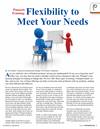
Flexibility To Meet Your Needs
Are you relatively new to Pinnacle products, having just implemented? Or
are you a long-time user? Either way, you may feel you need a refresher
course but are reluctant to take one. Pinnacle's new training strategies
are hoping to change that. We now offer three types of training:
Arlington-based, on-line, and on-site. Any of these offerings can help
you become more proficient with our products, making you more efficient
and effective...READ MORE
|
|
|
|
|

|
|
Ask The Expert
One of the best ways to help increase uptime and lower the need for
support calls is to learn how to navigate the log files and what data the
individual logs contain. Once you understand how the logs are laid out
you are able to locate the data you need to review quickly and
accurately...READ MORE
|
|
|
|
|

|
|
Taking Your Loyalty To The Next Level
A successful loyalty program depends on consumer participation, and ease
of membership is the key to achieving high rates of participation.
Consumers are savvy and experienced in how loyalty programs work; they
know that they should be able to provide a phone number to participate in
a retailer's loyalty program. Requiring the consumer to present a card
each time they make a purchase is an inconvenience, the very thing that a
convenience store does not want to impose on their customers...READ MORE
|
If you would like to
recommend someone else in your company who might enjoy reading The
Perspective, you can submit a recommendation form on our website.

|
©2014
The Pinnacle Corporation ǀ 201 East Abram Street ǀ Arlington, TX
76010 ǀ 817.795.5555 ǀ www.pinncorp.com
|
Copyright © 2014 CSP
Business Media, LLC. All rights reserved.
To remove rod@rhsmith.com from future Pinnacle Corporation third-party
emails, please click here.
CSP Business Media offers are sent only to individuals who supplied an
email address as part of a subscription request or order for a CSP Business
Media magazine or newsletter. We distribute these advertising messages to
inform you of special events, new products, and other third-party offers
that we believe you will find helpful in your business or career. To stop
receiving all CSP Business Media offers, please click here.
CSP Business Media, LLC. | www.CSPBusinessMedia.com
1 Tower Lane, Suite 2000, Oakbrook Terrace IL 60181
Phone: 630-574-5075 | Fax: 630-574-5175
|
|

